Dental Emergency? Same-day appointments available. Call now: Cary Dental Arts: (919) 297-2701 | Wake Dental Arts: (919) 297-8858

Unique to You · Oral Conditions

Impacted Wisdom Teeth and Pericoronitis

Impacted Wisdom Teeth and Pericoronitis explained in clear patient-friendly language, including what to notice, what a dentist may review, and questions to ask.

Oral Conditions

Wisdom teeth that are trapped or partly erupted can collect plaque, inflame nearby gums, damage adjacent structures, or become infected.

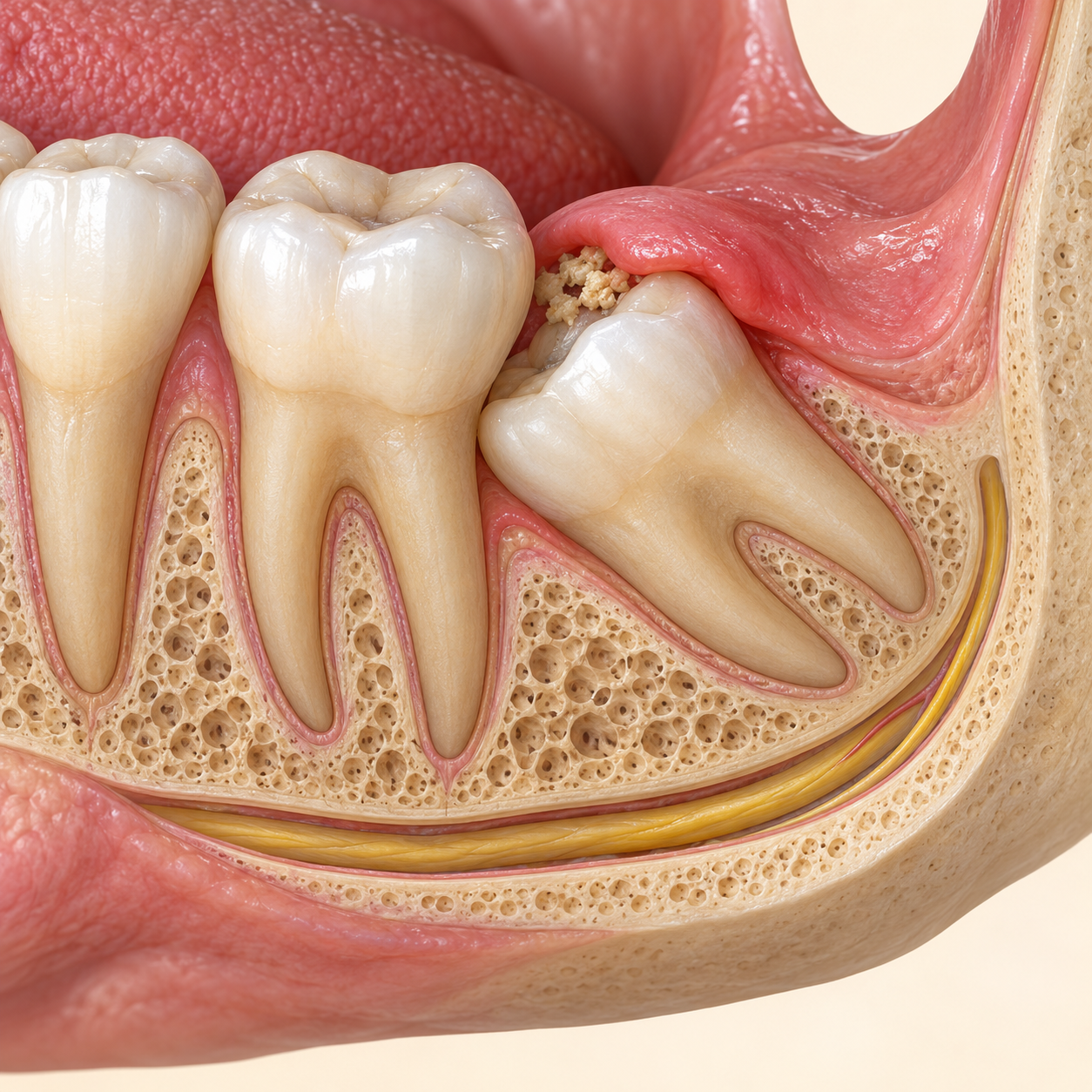
Clinical illustration of impacted wisdom teeth and pericoronitis

Evidence-based guidance

Practical steps for impacted wisdom teeth and pericoronitis.

Overview

A wisdom tooth is impacted when bone, gum, or another tooth prevents normal eruption. A partly erupted tooth can develop pericoronitis—painful inflammation or infection in the surrounding gum flap—while some fully impacted teeth remain symptom-free.

Causes

  • Limited jaw space, tooth angle, surrounding bone, or neighboring teeth can block a third molar from erupting normally.
  • Food and bacteria can collect beneath gum tissue over a partly erupted tooth and trigger pericoronitis.

Contributing Factors

  • Poor access for cleaning, deep pockets, decay, gum disease, and repeated biting on swollen tissue increase problems.
  • Risk and treatment decisions depend on tooth position, root development, age, symptoms, and nearby anatomy.

Symptoms

  • Symptoms may include pain behind the last molar, swollen gum, bad taste, drainage, limited opening, painful swallowing, or facial swelling.
  • Seek urgent care for fever, spreading swelling, difficulty breathing or swallowing, or rapidly worsening symptoms.

Diagnosis

  • The dentist examines eruption, gum tissue, cleaning access, decay, bite trauma, and adjacent teeth.
  • Panoramic or three-dimensional imaging may be used to evaluate position, roots, bone, cysts, and proximity to nerves or sinuses.

Prevention

  • Keep partially erupted teeth and surrounding gums as clean as possible and attend monitoring visits when teeth are retained.
  • Early review helps identify decay, gum disease, cystic change, or damage to a neighboring tooth before symptoms become severe.

Treatment

  • Acute care may include gentle cleaning and irrigation, pain management, and antibiotics only when clinically indicated.
  • Definitive care may involve monitoring, removal of inflamed gum tissue, or extraction after discussing risks, benefits, and alternatives.

Explore care

Related Dental Arts services

Next action

Book, call, or route this visit to the right location.